
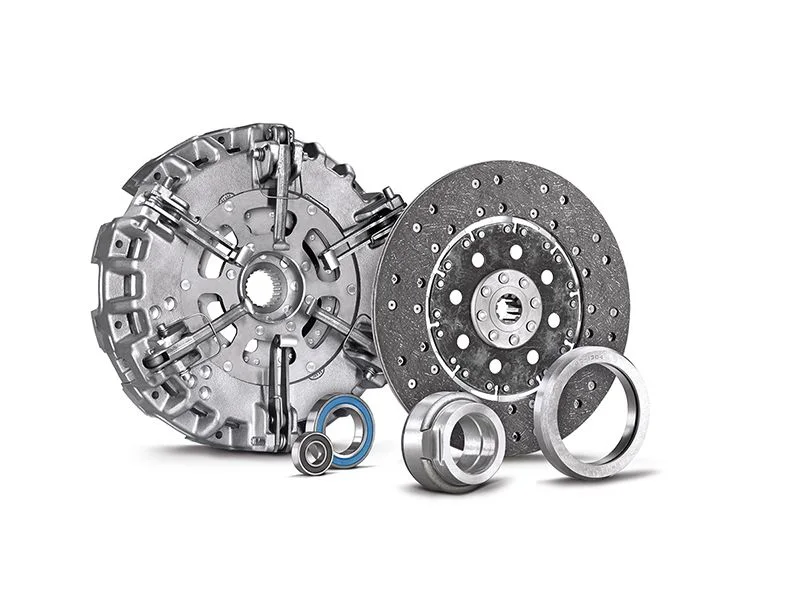
The truck clutch is one of the most critical components of the transmission box. When it deteriorates or fails, the result is not just a disruption to the journey – it is immobilisation of the vehicle, high repair costs and lost working hours. Knowing when to replace a truck clutch, you can avoid the worst and plan maintenance in a timely manner.
In this guide you will find the 7 most reliable signs of wear, information on clutch service life and practical tips from the experts at Kothros Platotechniki.
1. Clutch Slip
Clutch slip is the most common and clearest sign of wear. It shows when the engine revs rise without a corresponding increase in vehicle speed – as if the engine were ‘running idle’. On heavy trucks, this is particularly noticeable on uphill gradients or when loading.
The cause is almost always wear of the friction disc. High-specification friction discs from companies such as ZF Sachs and Schaeffler LuK offer a significantly longer service life than anonymous aftermarket products.
2. Difficulty Shifting Gears
If you notice resistance when shifting gears – especially into the lower gears – or if the gearbox is hard to ‘push’, the clutch is probably not disengaging fully. This problem is called clutch drag and is usually due to a worn release bearing or incorrect adjustment of the mechanism.
If left unrepaired, the constant friction wears out both the disc and the pressure plate faster, leading to a full replacement instead of a partial repair.
3. Strange Smells – Burnt Friction Material
The smell of burnt plastic or burnt friction material when starting off or on an uphill gradient is a worrying sign. It means that the friction disc is overheating due to slipping. If it keeps happening, the thermal stress can cause permanent deformation of the pressure plate, dramatically increasing the cost of repair.
4. Heavy Pedal, or Conversely an Excessively Light One
The clutch pedal should have a specific resistance and travel. If the pedal has become extremely heavy, the cause may be a worn release bearing or a faulty hydraulic circuit (release cylinder). If, on the other hand, it is very light or ‘sinks’ without resistance, there may be a leak in the hydraulic system or wear of the diaphragm spring.
On modern heavy trucks (MAN, Mercedes Actros, Volvo FH), the hydraulic clutch control system needs regular checking of the fluid level and quality.
5. Vibrations When Starting Off
Noticeable vibrations or ‘judder’ when the truck starts off (especially from standstill under load) usually indicate wear of the damper springs (torsional dampers) of the friction disc. On a high-power commercial truck, this wear transmits particularly heavy forces to the gearbox.
6. Friction Noises or Knocking When Using the Pedal
Squeaking, creaking or metallic knocking when pressing or releasing the pedal should not be ignored. It usually indicates wear of the release bearing (throw-out bearing). This component is relatively inexpensive, but if it is allowed to wear out completely, it can cause chain-reaction damage to the disengagement mechanism.
7. High Engagement Point
If the clutch ‘bites’ too high – almost at the end of the pedal travel – it means that the friction disc has worn significantly. The opposite situation (biting point too low) may indicate a need for adjustment or wear of the diaphragm spring. In either case, timely intervention saves considerable cost.
How Often Is the Clutch Replaced on a Truck?
There is no fixed replacement interval – service life depends on many factors:
- Type of loading: Trucks that work in the city, with many starts, wear out the clutch much faster than those that mainly run on motorways.
- Load level A permanently overloaded truck can ‘burn out’ a clutch at 150,000–200,000 km instead of 400,000+ km.
- Spare part quality Genuine kits (ZF Sachs, LuK) last almost twice as long as anonymous aftermarket products under the same operating conditions.
- Driver’s technical know-how Driving habits (avoiding ‘riding’ the clutch pedal, starting off correctly) have a dramatic effect on service life.
As a rule, a reliable clutch kit in a heavy long-haul truck lasts 350,000–500,000 kilometres. In urban and agricultural applications, replacement may be needed earlier.
Genuine vs Aftermarket Clutch: What Difference Does It Make to Service Life?
Choosing the right spare part is just as important as replacing the clutch in time. OEM clutch kits from Schaeffler LuK and ZF Sachs are designed with precise tolerances for each type of engine and gearbox, ensuring optimum performance and maximum service life.
For more information on the difference between OEM and aftermarket, read our related guide: Genuine vs Aftermarket Clutch: What Is Really Worth It?
Remanufacturing Instead of a New Clutch: A Smart Choice
In some cases, the clutch remanufacturing is a cost-effective alternative to buying a new one – especially for older models where the availability of new spare parts is limited or their price is high. Kothros Platotechniki has a specialised remanufacturing unit in Thessaloniki, the only one of its kind in Northern Greece. Read also: Clutch Remanufacturing vs Buying New: Full Cost Analysis.
Frequently Asked Questions (FAQ)
How many kilometres does a clutch last on a truck?
A genuine clutch kit (ZF Sachs or LuK) on a heavy long-haul truck normally lasts 350,000–500,000 kilometres. In urban applications or with overloading, the service life can drop to 150,000–200,000 km.
What is the most common sign of clutch wear?
The most common sign is clutch slip: the engine revs rise without a corresponding increase in speed. Other common signs are metallic knocking when pressing the pedal, a burning smell and difficulty shifting gears.
How much does it cost to replace the clutch on a truck?
The cost of replacing the clutch on a heavy truck depends on the model, the vehicle manufacturer and the choice of OEM or aftermarket kit. In some cases, remanufacturing the existing clutch is a more economical solution. Contact Kothros Platotechniki for a cost estimate.
Can I drive with a worn clutch?
It is not recommended. A worn clutch puts extra strain on the gearbox and the engine, increasing the risk of chain-reaction damage. In addition, a vehicle with a slipping clutch has reduced controllability, especially on uphill gradients under load.
Conclusion: Don’t Wait Until It Leaves You Stranded
Spotting the signs of wear early and replacing the clutch promptly with genuine OEM spare parts is the most cost-effective option in the long run. Kothros Platotechniki, an authorised distributor of ZF Sachs, Schaeffler LuK and MAHLE, ensures that you get a genuine clutch kit, shipped to anywhere in Greece on the same day.





 EL