
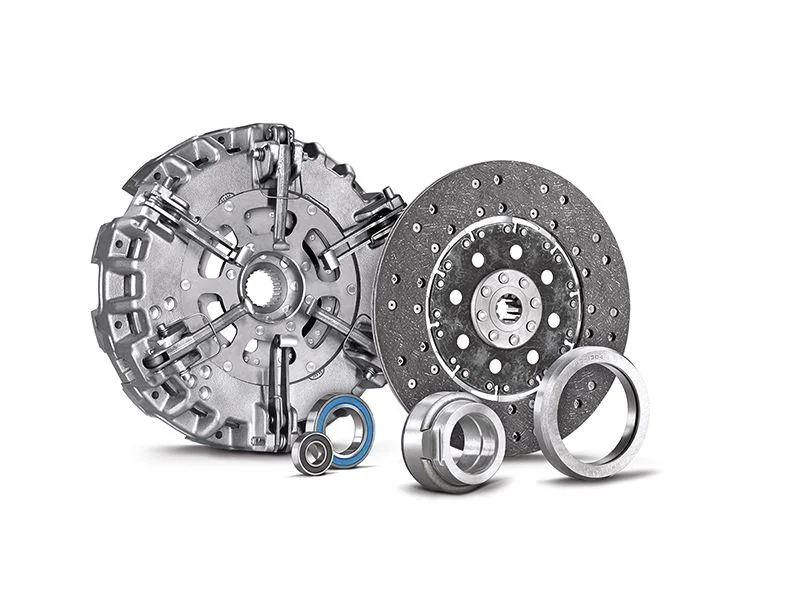
The truck clutch is one of the most critical components of the transmission box. When it deteriorates or fails, the result is not just a disruption to the journey – it is immobilisation of the vehicle, high repair costs and lost working hours. Knowing when to change truck clutch, you can avoid the worst and plan maintenance in a timely manner.
In this guide you will find the 7 most reliable signs of deterioration, information on the lifespan of the clutch and practical tips from its experts Plastotechnic knife.
1. Clutch Slip
Clutch slip is the most common and clear-cut sign of wear and tear. Manifested when engine upshifts without corresponding increase in vehicle speed – also engine ‘running in vacuum’. In heavy lorries, this phenomenon is particularly evident on slopes or during loading.
The cause is almost always damage to the friction disc (Friction disc). High-end friction discs from companies such as ZF Sachs and the Schaeffler LUK they offer a significantly longer shelf life compared to anonymous aftermarket products.
2. Difficulty changing speed
If you notice resistance to changing gears – especially low gears – or if the gearbox is difficult to ‘push’, the clutch may not be fully released. This problem is called clutch drag this is usually due to deteriorated release bearing or incorrect adjustment of the mechanism.
If left unrepaired, continuous friction diverts both the disc and the plateau faster, leading to total replacement instead of partial repair.
3. Odoriferous smells – Causa material of Trivesis
The smell of burnt plastic or burnt friction material at start-up or in anxiety is a sign of concern. Means that the friction disc is overheated by slipping. If the phenomenon is repeated, thermal stress can cause permanent pressure plate deformation, dramatically increasing repair costs.
4. Heavy Pental or Adverse Excessive Light
The clutch pedal shall have a specific resistance and trajectory. If the pedal has become exceptionally heavy, it may be a damaged release bearing or a defective hydraulic circuit (release cylinder). If, on the other hand, it is very light or ‘submerged’ without resistance, there may be a leak in the hydraulic system or damage to the diaphragm spring.
In modern heavy lorries (MAN, Mercedes Actros, Volvo FH), the hydraulic clutch control system needs regular checking of the level and quality of the liquid.
5. Vibration Opening
Noticeable vibrations or ‘cradles’ when starting the truck (especially from standstill to loading) usually indicate damage to the torsional DAMPERS of the friction disc. In a high-power commercial truck, this wear transmits particularly stressful forces to the gearbox.
6. Sounds of friction or cream during the use of Pental
Trimmings, trimmings or metal cups when the pedal is pressed or released must not be ignored. They usually indicate a release bearing/throw-out bearing wear. This component is relatively economical, but if allowed to deteriorate completely, it can cause knock-on damage to the foreclosure mechanism.
7. High Engagement Point
If the clutch gets too high – almost at the end of the pedal journey – it means that the friction disc has deteriorated significantly. The opposite situation (freezing point too low) may indicate a need to adjust or damage the bulkhead spring. In either case, early intervention saves significant costs.
How often is the coupler changed to a Truck?
There is no fixed replacement interval – the lifespan depends on many factors:
- Type of loading: Trucks working in a city with many start-ups get a clutch much faster than those running mainly on a motorway.
- Cargo height: A permanently overloaded truck can ‘burn’ a clutch at 150.000 – 200.000 km instead of 400.000 + km.
- Quality of spare parts: Genuine kits (ZF Sachs, LUK) withstand almost twice as much as anonymous aftermarket products under the same operating conditions.
- Driver’s technical knowledge: Driving habits (avoiding “hanging” pedals, getting started correctly) have a dramatic impact on the lifespan.
Typically, a reliable clutch kit in a long-haul heavy truck can withstand 350.000 – 500.000 km. In urban and rural applications, replacement may be needed earlier.
Original vs Aftermarket Component: What difference does it make to the duration of life?
Choosing a spare part is as important as early replacement. OEMs of clutch kits from Schaeffler LUK and ZF Sachs they are designed with precise tolerances for each type of engine and box, ensuring optimum performance and maximum service life.
For more information on the OEM and aftermarket dispute, read our guide: Original vs Aftermarket Component: What is really worth?
Remanufacturing Instead of New Clutch: A Smart Choice
In some cases, the clutch reconstruction it is a cost-effective alternative to buying new ones – especially for older models where the availability of new spare parts is limited or their price high. Plastotechnics has a specialised reconstruction plant in Thessaloniki, the only one of its kind in Northern Greece. Please read also: Refurbishment of clutch vs New market: Full Cost Analysis.
Frequently Asked Questions (FAQs)
How many kilometres does the clutch withstand in a truck?
A genuine clutch kit (ZF Sachs or LUK) in a long-distance heavy truck will normally withstand 350.000 – 500.000 km. In urban applications or with overload, the lifespan can be reduced to 150.000 – 200.000 km.
What is the most common sign of clutch damage?
The most common sign is clutch slip: the engine shall climb speed without a corresponding increase in speed. Other common signs are the metal type when pressed, the burning smell and the difficulty of changing gears.
How much does it cost to replace a clutch in a truck?
The cost of replacing a clutch in a heavy truck depends on the model, the vehicle manufacturer and the OEM or aftermarket kit option. In some cases, rebuilding the existing clutch is a cheaper solution. Please contact Plastotechnics for cost estimation.
Can I drive with a deteriorated clutch?
Not recommended. A deteriorated clutch weighs on the gearbox and the engine, increasing the risk of cascading damage. In addition, a vehicle with a sliding clutch is less controllable, especially on loadable slopes.
Conclusion: Don’t wait to leave you in the Middle
Early identification of wear and tear flags and immediate replacement with original OEMs of spare parts is the most advantageous option in the long term. Plastotechnics, an authorised distributor ZF Sachs, Schaeffler LUK and Mahle, it ensures you have a genuine clutch kit sent to all of Greece on the same day.





 Ελληνικά